Supreme Court Upholds Ruto Win in Kenya Polls Top story Politics
Written by admin on September 5, 2022
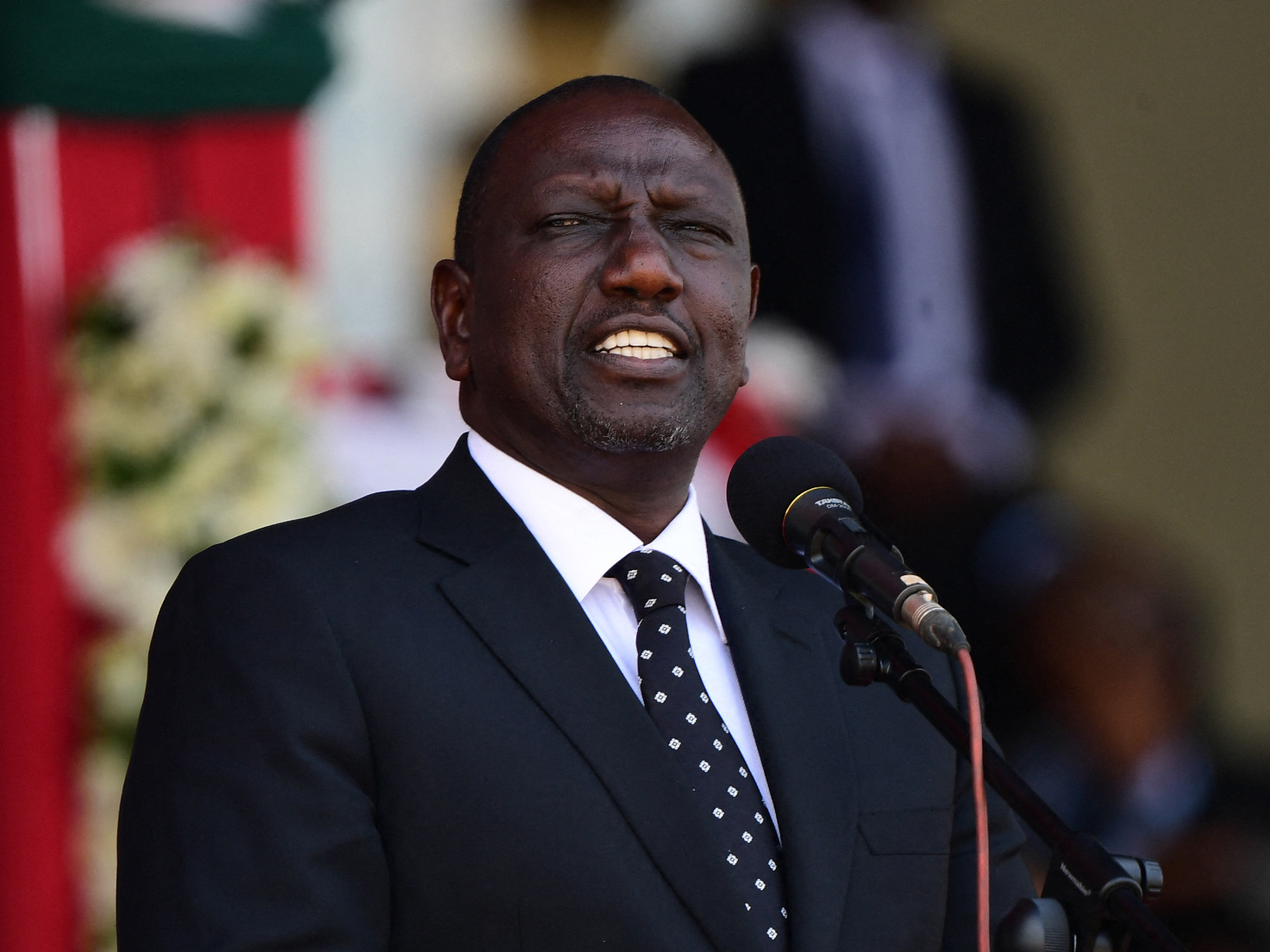
The outcome of the polls had been challenged by Ruto’s main challenger Raila Odinga on the grounds that the technology deployed by the Independent Electoral and Boundaries Commission of Kenya did not meet the standards of Integrity to guarantee accurate and verifiable results.
The Supreme Court of Kenya has upheld the presidential election results in which the Independent Electoral and Boundaries Commission declared William Ruto winner of the August 9 polls.
The official results released by the commission showed that Ruts, currently the deputy president of Kenya won the hotly contested race with 50.5 per cent of the total votes cast while Raila Odinga secured only 48.8 per cent of the vote.
The outcome was, however, challenged by Ruto’s main challenger Raila Odinga and eight other petitioners on the ground that the technology deployed by the Independent Electoral and Boundaries Commission of Kenya did not meet the standards of Integrity to guarantee accurate and verifiable results.
Odinga also alleged fraud in the vote tallying process and claimed that he had enough evidence to show that he had won the election. However, a panel of seven judges unanimously ruled that they were not persuaded by the allegation that the standards of IEBC’s technology failed the test. They added that the pieces of evidence produced by the petitioners were either false or not substantive enough to affect the outcome of the final tally.
“The Supreme Court is not persuaded that the Independent Electoral and Boundaries Commission, IEBC, technology did not meet the standards for ensuring the accurate and verifiable outcome of the August 9 poll,” Chief Justice Martha Koome said.
She added that the allegation that IEBC used a tool to tamper with forms 34a was sufficiently explained when IEBC demonstrated how the KIEMS tools captured and transmitted the image. Based on the evidence produced to counter the accusation, the Chief Justice said that there was no credible evidence provided to prove that anyone accessed the IEBC system to intercept the said forms.
She explained that there was no significant difference captured between the Forms 34A uploaded on the public portal and the physical Forms 34A delivered to Bomas that would have affected the overall outcome of the presidential election.
On whether Venezuelan national Jose Carmago accessed the electronic system and interfered with the results as presented to the court by lawyer Julie Soweto, the Chief Justice said that it turned out to be no more than hot air and that the court was instead taken on a wild goose chase that yielded nothing of value.
Soweto had alleged that IEBC Chairperson Wafula Chebukati conducted the tallying process and assigned the other commissioners to peripheral roles, and kept them away from the exercise, an issue that led to an eleventh-hour protest by four of the commissioners of the Independent Elections and Boundaries Commission.
But according to the Chief Judge, the four commissioners actively participated in the tallying and announcing of the results at the Bomas IEBC, until minutes before the final announcement when they moved out, adding that this was not a sound reason for the commission to nullify the results of the poll.
“Are we to nullify an election based on a last-minute boardroom rupture? To do this would be tantamount to subjecting the sovereign will of the Kenyan people to the quorum antics of IEBC, which we cannot do,” she said.
About the presentations by Julie Soweto and another by John Githongo in the supreme court, Justice Koome warned that those who swore false affidavits had committed a crime. “Affidavits filed in court must only deal with facts. Swearing to falsehoods is a criminal offence” she said,
The court added that it was not satisfied with the submission that the postponement of elections could have suppressed the will of the people. The court said that although the incident was a genuine mistake, which could have been avoided, there is no evidence that this suppressed the will of the people in those areas to vote since voting is an individual decision.
She added that the failure of people to vote could have affected all the six categories of candidates involved, and not only one.
On allegations of ballot staffing, the court said that it found no unexplained significant discrepancies in the ballots cast and those declared, adding that there is no evidence of ballot stuffing proven.
On whether Ruto garnered the 50.49 votes, Koome said rejected ballots are not part of the ballots to be counted to determine the winner, as was the case in the 2013 Kenya Presidential Election Petition.
“It is our finding that the declared president-elect attained 50%+1 of all the votes cast under Article 138 of the constitution.”
She said the decision to uphold the presidential election result was a unanimous decision and a more detailed judgement would be issued later.
James Orengo, one of the lawyers of the petition said he disagreed with the judgement, even though, he accepted the outcome. “I want say without fear of contradiction that we do not agree with the decision of the Supreme Court; I accept but do not agree… Courts sometimes make mistakes which are to be corrected over time, Courts make political decisions.